




Tuesday, January 16, 2024


Sunday, June 05, 2022
Cakap Pasal GST Tapi Cukai Sendiri
Tak Bayar
1. Mohd Najib Abdul Razak kata, hasil
(revenue) kerajaan pusat akan naik dengan banyak jika GST dilaksanakan semula.
2. Kata dia lagi, dengan hasil yang
lebih banyak itu, hidup rakyat jelata akan lebih senang apabila kerajaan
membelanjakan duit itu.
3. Setuju. Tapi daripada manakah
datang hasil GST yang lebih banyak itu? Daripada mana lagi kalau bukan daripada
pengguna yang membeli barang-barang dan perkhidmatan.
4. Siapakah mereka? Mereka
termasuklah berpuluh-puluh juta rakyat jelata B40 di bandar, kampung dan
Rancangan Felda. Ertinya mereka mendapat faedah daripada duit mereka sendiri.
Mereka bayar GST tetapi bukan semua duit itu akan balik kepada mereka. Kalau
dapat balik sebahagian kecil pun sudah boleh dikira bertuah.
5. Duit GST itu akan jadi sebahagian
daripada Akaun Disatukan (Consolidated Account) yang digunakan untuk bayar
gaji, elaun, pencen dan macam-macam lagi imbuhan kepada 1.6 kakitangan awam
- bermula dengan Yang di-Pertuan Agong kepada Perdana Menteri,
Menteri-menteri Kabinet dan Timbalan Menteri. Selebihnya digunakan untuk
penyelenggaraan dan bayar balik hutang.
6. Yang Najib tidak bagi tahu adalah
untuk pembangunan, macam bina sekolah dan hospital, kerajaan terpaksa
berhutang. Dalam zaman dia sendiri, banyak duit yang dipinjam kononnya untuk
pembangunan telah disonglap melalui rasuah dan pecah amanah. Paling besar
adalah pencurian duit 1MDB.
7. Betul kadar GST tidak banyak
berbeza daripada SST tapi liputan GST adalah lebih luas dan menyeluruh jadi
beban ke atas pengguna dan rakyat jelata lebih berat.
8. Lagi pun siapa Najib hendak
bercakap tentang cukai sedangkan cukai sendiri dia dan anak-anak dia tak bayar.
Bukan seribu dua tapi RM1.7 bilion.
Sekian.
Monday, May 31, 2021
Bread for the People
1. I have mentioned in one of the recent postings that the uneven treatment of people breaking the Covid-19 Standard Operating Procedure (SOP) brings back memories of class struggle of the past.
2. The struggle that pitched the ordinary people against the ruling class. On the side of the suppressed masses were the thinkers, poets, writers and dreamers. The ruling elites had the political power, money, the army and the propaganda machine.
3. The French people might not have bread to eat but they had the likes of Voltaire and Jean Jacques Rousseau to speak up for them and keep their spirit alive. With their philosophical views and passionate writings, they brought about changes by abolishing the class division and other chaos in the country.
4. The French elites were so detached from reality (or just didn't care) that, when the powerful Queen Marie Antoinette was told that the people had no bread to eat, she said they could eat cakes.
5. Then on 14 July 1789, the French people stormed a medieval armory-cum-political prison known as the Bastille and triggered the French revolution. Marie Antoinette and her husband, King Louis XVI, were put on trial, found guilty and had their heads chopped off.
6. I'm sure Prime Minister Mahiaddin Md. Yasin, being the representative of the Yang di-Pertuan Agong, had read the French history and would make sure that when the two-week lockdown resumes tomorrow, the people have enough bread to eat. I don't think the rakyat are expecting to be served cakes or beef of any type.
7. We may not have the eloquence of Voltaire and Jean Jacques Rousseau but we have the social media at our disposal. We can express our views, expose injustices and call for change.
8. Mahiaddin, Hamzah Zainuddin and Saifuddin Abdullah can use their vast power to cow the people or even incarcerate them, but truth will prevail. The social media has no editor that they can order around.
9. It's a level playing field. It favours not the king nor the pauper. Whoever plunges into it will be subjected to the same bouquets and brickbats.
10. For those brave souls who are here in Malaysia (as opposed to those who live abroad or are fugitives from Malaysian laws), do be careful. Please respect the laws, ethics and customs of the country. Remember the saying, there are many ways to skin a cat.
Thank you.
Thursday, May 27, 2021
Tajuddin Isn't the Only Embarrassment

A Kadir Jasin
1.The swift sacking of Tajuddin Abdul Rahman as the Chairman of Prasarana Malaysia Berhad is the government's way of pacifying the people following Monday's first ever LRT train crash that injured more than 200 passengers.
2. The light rail transport (LRT) system for Kuala Lumpur and the Klang Valley has been in operation for 23 years, carrying some 800,000 passengers a day.
[Please be mindful of the law, ethics and courtesy when commenting. Anonymous comments will not be entertained. Please use real name or pseudonym.]
3. Tajuddin's insensitive, amateurish comments at Tuesday's press conference had added insult to injury for the victims and riled up the social media.
4. The Umno warlord was widely criticised for his uncouth comments and treatment of the journalists with many blaming the Prime Minister, Mahiaddin Md. Yasin @ Muhyiddin, for appointing him to the job.
5. Tajuddin’s firing was done by Finance Minister, Tengku Zafrul Abdul Aziz, via a one-paragraph letter dated May 26. Prasarana is under the purview of the Finance Ministry.
6. There was a chorus of condemnation against the Prime Minister when Tajuddin's appointment was announced on last May 13. Mahiaddin was accused of committing political corruption for using Government-linked companies to buy support of Members of Parliament.
7. Tajuddin might have made an absolute ass (as in donkey) of himself at the PC but the joke is actually on the person who appointed him.
8. Alas, Tajuddin isn't the only embarrassment in the Perikatan Nasional Government. Many among Mahiaddin's hundred odd appointees to the Cabinet, the GLCs and as deputy ministers are as bad or even worse than the Pasir Salak MP.
9. This is to be expected because the appointments were not based on merits but merely to have as many MPs as possible on the government's side.
10. It’s interesting to see Umno’s reaction to Tajuddin’s humiliation. This Perak politician is an important member of the party. He is a member of its Supreme Council and was only recently appointed its Election Director.
11. Incidentally, Umno President Ahmad Zahid Hamidi had said a few days earlier that it wasn’t fair to blame Umno for the poor performance of the PN Government notwithstanding that many key members of Mahiaddin’s XL Cabinet are from the party.
Thank you.
Note: Adapted from my Facebook.
Sunday, January 03, 2021
Mengharapkan Annus Mirabilis 2021
A Kadir Jasin
بِسْمِ اللهِ الرَّحْمنِ الرَّحِيمِ

Lapan puluh peratus rakyat dijanjikan vaksin
1. Tidak syak lagi, tahun 2020 yang baru tiga hari berlalu adalah "annus horribilis" dalam sejarah dunia pasca-Perang Dunia Kedua.
2. Dalam bahasa Latin is bermaksud tahun yang teruk atau celaka. Tidak ada yang lebih teruk dan tragis bagi tahun 2020 daripada wabak besar Covid-19.
3. Setelah lebih sedikit setahun dunia bertarung dengan pandemik ini barulah nampak cahaya di hujung terowong dengan penemuan penawar untuknya. Sehingga 31 Disember lalu, lebih 7.2 juta kes telah dilaporkan di seluruh dunia dengan 411,000 kematian. Maksudnya dalam 5 atau 6 orang mati bagi setiap 100 yang dijangkiti.
4. Sehingga 1 Januari 2021, negara kita telah mencatatkan 115,078 kes dengan 474 kematian atau 2.42 kematian dalam setiap 100 jangkitan. Syabas dan terima kasih tidak terhingga kepada setiap petugas barisan hadapan, khususnya kakitangan perubatan.
5. Maka dengan menadah tangan ke langit, kita memohon kepada Tuhan agar tahun baru 2021 ini akan menjadi tahun "annus mirabilis" - tahun sejahtera.
6. Insya Allah jika wabak rasuah tidak menjangkiti usaha mengawal dan seterusnya menyekat pandemik ini, 80 peratus rakyat Malaysia akan mendapat suntikan vaksin mencegah virus Corona baru tidak lama lagi. Ada laporan mengatakan seawal bulan depan.
7. Vaksin adalah ubat pencegah jangkitan yang mengandungi bahagian yang lemah atau tidak aktif sesuatu organisme (antigen). Fungsinya adalah menggerakkan sistem pertahanan badan apabila berlaku serangan.
8. Vaksin terbaru, termasuk untuk Covid-19, mengandungi "blueprint" bagi menggalakkan (atau mengajar) badan penerima menghasilkan antigen sendiri bagi melawan jangkitan. Dewan Bahasa dan Pustaka mentakrifkan antigen sebagai bahan (protein atau toksin) yang merangsang pembentukan atau pengeluaran antibodi. Antibodi adalah kemampuan badan mempertahankan diri daripada serangan penyakit.
9. Maka sekali lagi kita menadah tangan ke langit memohon kepada Tuhan agar cakap-cakap mengenai rasuah, penyelewengan, salah guna kuasa dan pencarian keuntungan melampau dalam pembelian vaksin Covid-19 ini adalah khabar angin semata-mata.
10. Tetapi secara peribadi saya memohon Suruhanjaya Pencegahan Rasuah Malaysia (SPRM) agar membuka mata kerana belanja lebih RM2 bilion bagi membeli vaksin itu boleh menyebabkan ramai dewa, dewi dan manusia biasa gelap mata.
11. Pada 28 Disember, Timbalan Menteri Kewangan, Mohd Shahar Abdullah, dilaporkan berkata Malaysia membayar RM2.05 bilion untuk membeli 26.5 juta dos vaksin Covid-19.
12. Tapi tugas dan tanggungjawab kita bukan sekadar menangani pandemik Covid-19 tetapi juga ekonomi dan politik yang juga dalam kegawatan. Ekonomi akan pulih seiring dengan kejayaan mengawal Covid-19 tetapi kemelut politik lebih sukar untuk diatasi.
Sekian. Terima kasih.
Friday, January 01, 2021
Kena Sekat 24 Jam di Facebook
A Kadir Jasin
بِسْمِ اللهِ الرَّحْمنِ الرَّحِيمِ

Notis Facebook menyekat akses saya
1. Mulai kira-kira jam 6.30 petang Khamis, 31 Disember, kesampaian (access) saya kepada Facebook disekat (blocked) selama 24 jam seperti notis di atas.
2. Alasannya kerana "didn't follow our community standard" (tidak mematuhi piawaian komuniti kita) dalam tampalan pada 31 Disember dan 26 Jun. Selama tempoh sekatan tersebut, saya tidak boleh sentuh Facebook saya dan Facebook sesiapa pun kecuali untuk baca.
3. Setelah membaca balik empat rencana yang saya siarkan pada dua tarikh tersebut, saya tidak mengesan apa-apa yang luar biasa atau di luar norma tampalan-tampalan saya.
4. Lantas saya maklumkan kepada beberapa orang sahabat dan bertanya jika mereka tahu sebab musabab sekatan dikenakan ke atas saya.
5. Salah seorang yang memantau media sosial memberi jawapan berikut: "It's how Najib's trolls and UMNO cybertroopers work. They group together and all do a report on a comment or post en-masse, which normally could get a person blocked."
6. Dalam bahasa Melayu: "Inilah cara penghasut-penghasut maya Najib dan laskar siber Umno buat kerja. Mereka berkumpul dan semua mereka membuat laporan serentak terhadap sesuatu komen atau tampalan yang selalunya boleh menyebabkan seseorang disekat."
7. Wallahuaklam. Tapi ada lojiknya kerana dalam recana bahasa Inggeris mengenai moratorium pembayaran balik pinjam bank dan pengeluran simpanan KWSP itu, says ada menyebut nama Najib, 1MDB dan SRC International Sdn Bhd. Mungkin ini adalah antara kata-kata kunci untuk menggerakkan tindak balas. Lagi pun Najib sendiri melakukan serangan balas terhadap dengan mengulangi fitnah mengenai Realmild Sdn Bhd. Lojiknya, bila saya tulis dan orang balas, tak perlulah nak sekat-sekat. Kita mainlah cara anak jantan.
8. Selalunya rencana dalam bahasa Inggeris tidak mendapat komen yang banyak. Tapi dalam kes ini, ia mendapat lebih 700 komen yang kebanyakannya jenis "dedak".
9. Saya tidak mahu membuat spekulasi mengenai pihak-pihak yang ada pengaruh ke atas Facebook terlibat dengan penafian hak saya walaupun rencana bertajuk "Dangers of Bleeding Banks and EPF" itu kritikal terhadap sesetengah tindakan kerajaan.
10. Sebagai langkah berjaga-jaga dan saluran alternatif, saya akan siarkan semua atau sesetengah rencana Facebook dalam Blog saya, The Scribe A Kadir Jasin.
11. Saya harap penjelasan sahabat saya mengenai "trolls" dan "cybertroopers" itu tidak betul. Tapi kalau betul, amatlah mendukacitakan kerana orang dari kasta dewa boleh menggunakan kuasa politik dan duit ringgit bagi menafikan hak orang ramai bersuara di alam maya.
12. Akhir kalam, saya ucap selamat tahun baru 2021 kepada semua. Moga-moga tahun ini adalah "Annus Mirabilis".
Sekian. Terima kasih.
Subscribe to:
Posts (Atom)
About Me
- A KADIR JASIN
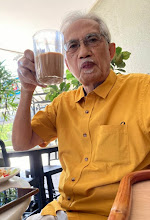
- I was born in 1947 in Kedah. I came from a rice farming family. I have been a journalist since 1969. I am the Editor-in-Chief of magazine publishing company, Berita Publishing Sdn Bhd. I was Group Editor NST Sdn Bhd and Group Editor-in-Chief of NSTP Bhd between 1988 and 2000. I write fortnightly column “Other Thots” in the Malaysian Business magazine, Kunta Kinte Original in Berita Harian and A Kadir Jasin Bercerita in Dewan Masyarakat. Books: Biar Putih Tulang (1998), Other Thots – Opinions & Observations 1992-2001 (2001), The Wings of an Eagle (2003), Mencari Dugalia Huso (2006), Damned That Thots (2006), Blogger (2006), PRU 2008-Rakyat Sahut Cabaran (2008), Komedi & Tragedi-Latest in Contemporary Malaysian Politics (2009) and Membangun Bangsa dengan Pena (2009).